
DAHLIA TUBERS~CAFE AU LAIT~BIG SHOWY FLOWERS ARE A TRAFFIC STOPPER! GROW THESE!!
BUY IT NOW, PRICE BREAK ON QUANTITY!!!
1 TUBER OR 3 TUBERS OR 5 TUBERS
- Botanical Name: Dahlia 'Cafe Au Lait'
- Common Name: Dahlia
- Bloomtime: July to September
- Flower: Showy, good cut
- Plant Height: 24 to 30 inches
- Foliage: Dark green
- Plant size: #1 tuber
- Requirements: Full Sun. Average, well drained soil, medium moisture.
- Suggested use: Cutting garden
- Life-cycle: Perennial
- Multiply: Yes
- USDA Hardiness Zone: 7-10
-
Attracts: Butterflies
Culture
Tuberous roots must be lifted in fall in cold winter zones. Although generally winter hardy to USDA Zones 7-10, many gardeners in those areas still lift and store the roots each winter because such care usually enhances plant performance. Plant tubers outside in spring 1-2 weeks before the last frost date (or start earlier indoors in pots) in organically rich, medium moisture, well-drained soils in full sun. Best flowering occurs in full sun, but plants generally appreciate some light, filtered shade in hot summer climates. Site in locations sheltered from strong winds. Plant taller varieties to 6-7" deep and shorter varieties to 2-3" deep. Spacing (1' to 3' apart) depends upon size of variety. For taller varieties (particularly those over 4' tall), consider the following planting procedure: (a) dig a 1-foot deep hole for each plant, amending the soil as needed, (b) return 6" of soil to the hole, (c) plant roots and cover with an inch or so of dirt and (d) gradually add the remaining soil as the shoots grow upward. pinch back taller varieties to promote bushy growth. Taller varieties usually need staking which should be put in place next to the roots at the time of planting. Tie stems to stakes with strips of soft cloth or nylon stocking. Feed plants monthly with low nitrogen fertilizers. Provide consistent moisture during the growing season and do not allow soils to dry out. Deadhead spent flowers to promote growth of additional flower buds. After first frost, carefully lift tuberous roots, dry for one day, dust with a fungicide and store in a cool location in damp peat (tubers will rot if peat is wet). Inspect roots periodically during winter to insure peat does not dry out. Smaller varieties are excellent container plants that must also be overwintered in a frost-free location.
Noteworthy Characteristics
Native to Mexico and Central America, dahlias are tuberous rooted perennials in the aster family. Hybrids in commerce today are available in a very large number of flower shapes, sizes and colors (except blue). Plants generally bloom from mid-summer to fall. Varieties grow from 1-5' tall. In an attempt to create order from chaos, hybrid dahlias have been organized into ten (10) different classifications or groups (single, anemone, collarette, waterlily, decorative, fall, pompon, cactus, semi-cactus and miscellaneous).
Genus name honors Dr. Anders Dahl (1751-1789), Swedish botanist and pupil of Linnaeus..
Garden Uses
Best in groups of at least 5. Borders, window boxes, containers. Good cut flower.
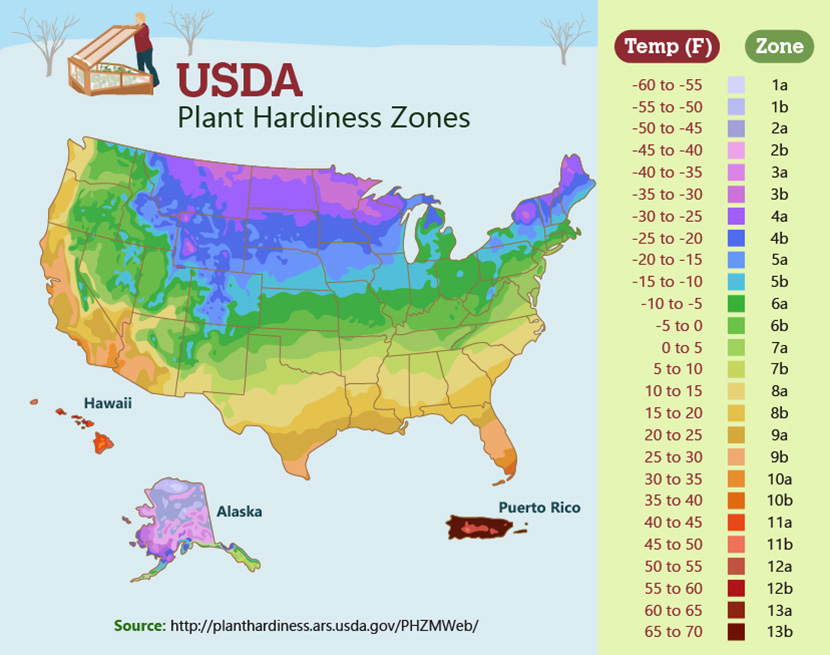
Knowing your Hardy Zone
Below is a USDA Hardiness zone map. Simply pick your state, pinpoint the area in which you live then match your color with the color coded chart to find your hardiness zone. I'll use myself (area) as an example; I have a plant that is hardy in zones 3-9 and am located in North Idaho. On the map it shows that my color is dark green which is zone 6a so following the planting and care instructions given for this plant, I will have great success in growing this plant in my garden!